Is your next fitness goal to get your first strict pull-up?
Pull-ups are hard (especially for women) and getting your first strict pull-up is big milestone in strength training. It requires arm, back, shoulder, core and grip strength. With consistent practice and smart progressions you can build up the necessary strength and crush those pull-up goals.
This guide breaks down what a strict pull-up is, why they’re challenging and how to train towards your first rep.
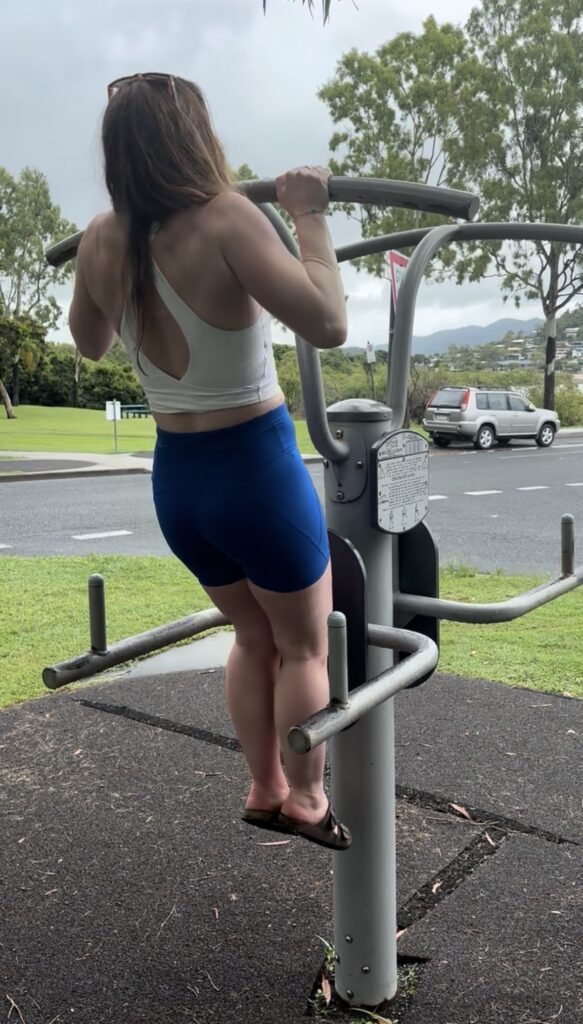
What is a strict pull-up?
A strict pull-up is performed hanging from the bar with straight arms, pulling your body up until your chin clears the bar without using momentum from the legs.
Why do pull-ups feel hard?
Pull-ups require you to lift your entire bodyweight, which is why progress can feel slow. They involve the lats (back muscles), biceps and forearms, shoulders, and core.
Step 1: build a strong foundation
Its important to build a base level of strength before attempting a pull-up. This can include:
- Dead hangs: hanging from the bar to build grip strength
- Ring rows: using rings to pull yourself in (this can be made harder by walking your feet out further
Aim to train these in small sets 2-3 times per week.
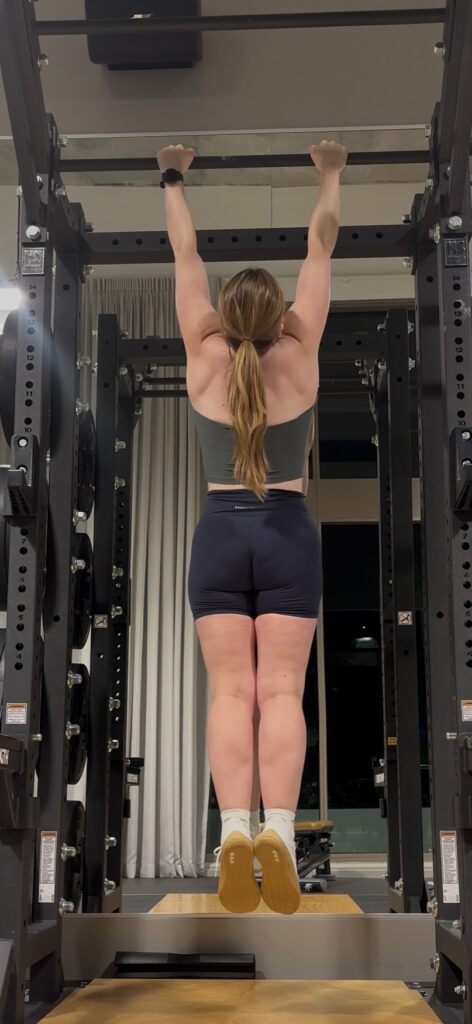
Dead hang
Jump up to the pull up bar and hang for 15-30 seconds, repeat this three times. Aim to be consistent each round and slowly build up the hang time over the weeks.
Ring rows
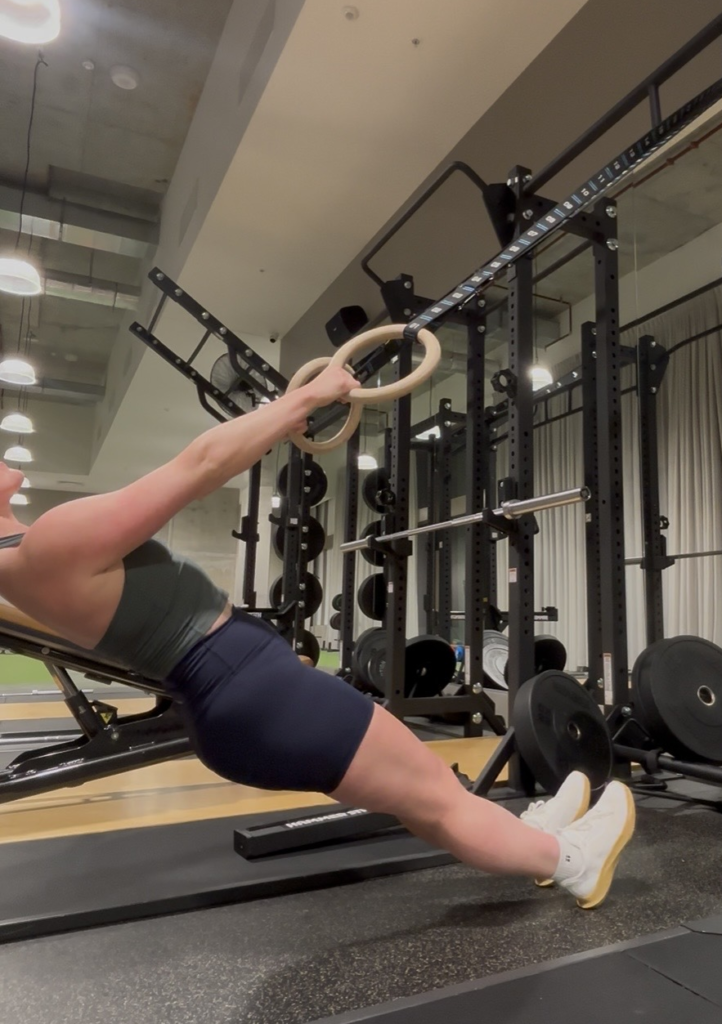
Hold the rings in each hand and slowly walk backwards until you are beneath them. The more upright you are, the easier it will be, the further away and more horizontal, the harder.
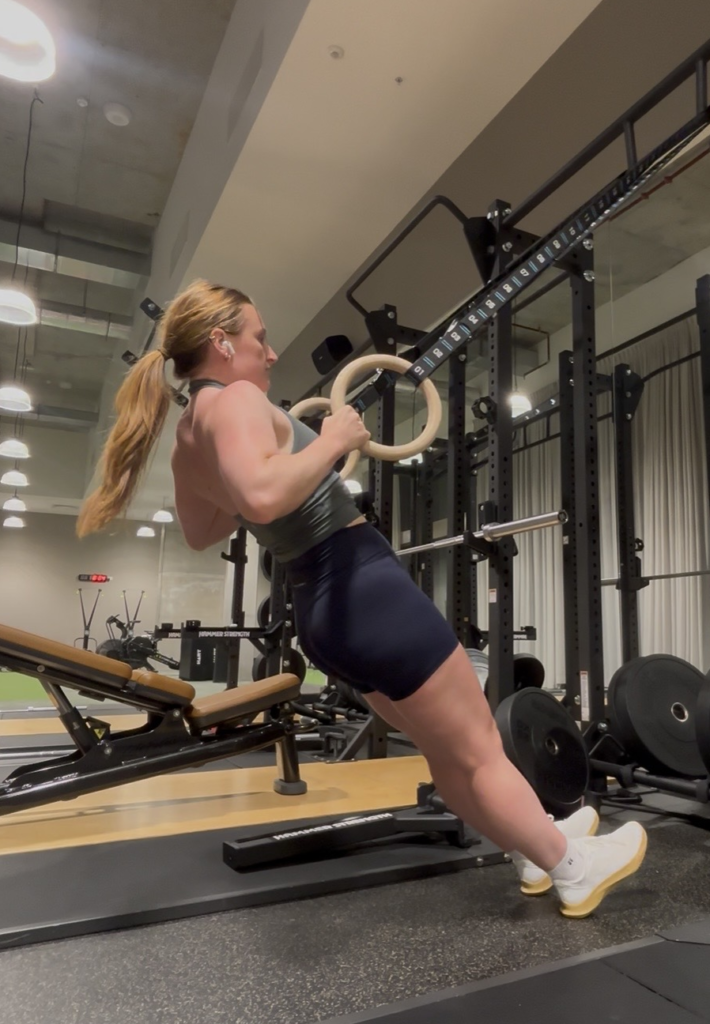
From this position, pull your chest towards your hands. Repeat this for 5-10 reps for 3 rounds, slowly building up the volume and difficulty over the weeks.
Starting position:
Finishing position:
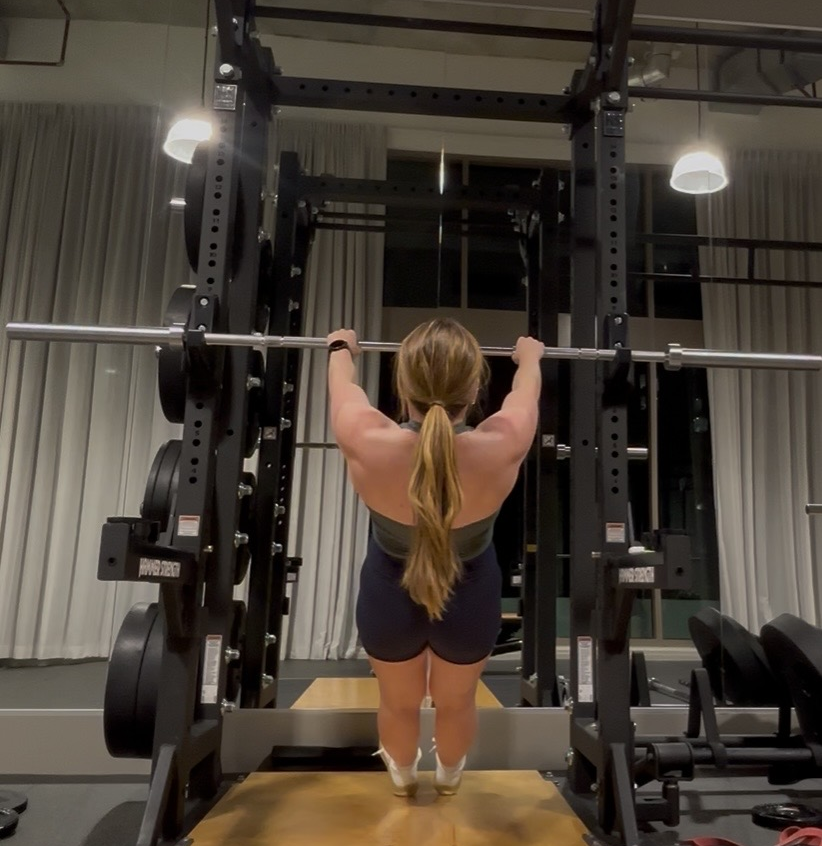
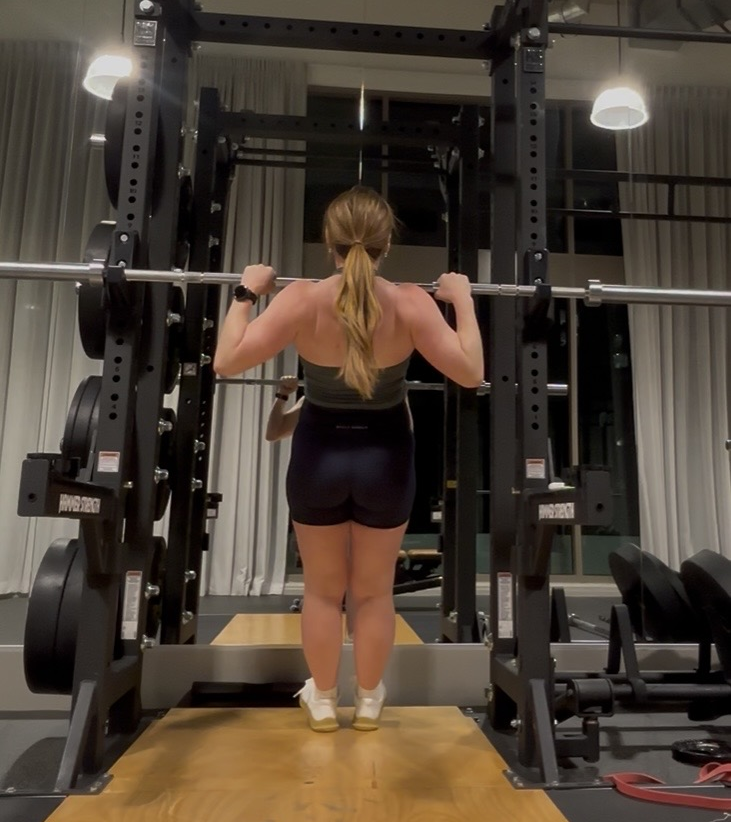
Alternatively, if you don’t have access to rings, this can be done using a barbell on a squat rack.
Starting position:
Finishing position:
Step 2: Pull-up Progressions
Progressions can help to mimic the pull-up movement, gradually increasing difficulty.
Pull-up progressions can include:
- Band-assisted pull-ups: use a resistance band to loop it round the pull-up bar and put your feet in to assist your pull up. The band should provide assistance in helping you pull yourself up. Select the thickness of band that helps you to pull yourself up and gradually reduce this over time.
- Negative pull-ups: using a box to jump up to the top of the pull-up bar and slowly lower yourself down over 3 seconds or so to build grip and lat strength.
- Chin over bar holds: Hold yourself at the top of the pull-up position.
- Weighted pull-ups: once you’ve got a couple of pull-ups, you can start adding weight to further build strength.
Step 3: Training
Its important to use a combination of the above consistently to build strength. Pull-up specific training should be approximately 2-3 times per week.
Sets should all focus on quality rather than quantity, allowing yourself sufficient rest.
An example session could include:
- 3 x 30 second dead hang
- 3 x 5 Banded pull-ups (or ring rows depending on your level)
- 3 x 5 second tempo negatives
Step 4: Recovery
Make sure to eat sufficient protein and get sufficient sleep every night to build strength and recover from your training.
Step 5: Get your first pull-up!
With consistently following the above you should get that milestone first pull-up in no time! Progress looks different for everyone but with time and consistency, results will come.
Happy training,
The Fit Adventurer


0 Comments